
Berlin’s new political star is offering something all of Europe needs – hope and housing | Fatma Aydemir
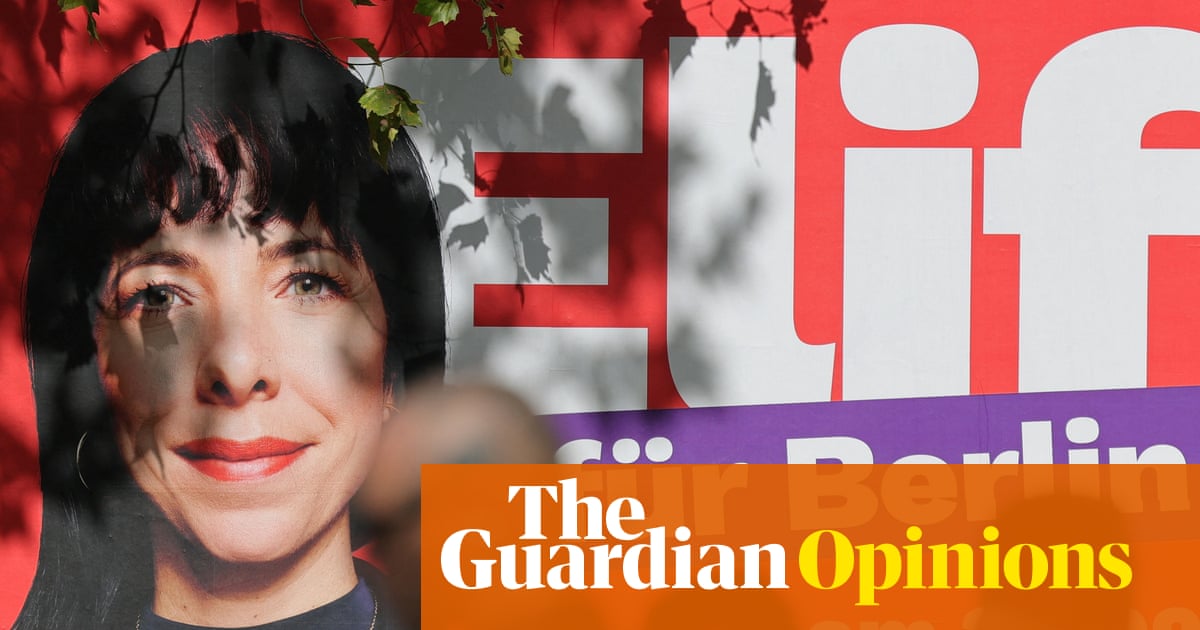
Elif Eralp wants lower rents and more public housing. It’s not rocket science but mainstream parties still don’t get why they are failingHope is a fragile thing. You can only hold on to it as long as you find reasons to believe tomorrow can be better. A woman, for instance, who has the resources and opportunity to rent her own flat will be more likely to leave her abusive husband and recover. A pupil who has their own room and desk to do their homework might find more meaning in thriving at school. And an elderly person who can afford to live in a neighbourhood where they feel safe and connected is less likely to become isolated and depressed.It’s not by chance that the examples above all revolve around the same topic. Affordable housing is possibly the most personal and most urgent social issue of our time. In Berlin, a city where 85% of residents live in rented accommodation, rents have risen by almost 70% in the past 10 years. And that is despite a rent control law that has been in effect since 2015. How? Loopholes and illegal practices have allowed property owners to continue putting pressure on the housing market. The social anxiety caused by this crisis, far from affecting just low-earners and single-parent households, affects vast parts of the middle class, too.Fatma Aydemir is a Berlin-based author, novelist, playwright and a Guardian Europe columnistDo you have an opinion on the issues raised in this article? If you would like to submit a response of up to 300 words by email to be considered for publication in our letters section, please click here. Continue reading...
Reporting preview
Elif Eralp wants lower rents and more public housing. It’s not rocket science but mainstream parties still don’t get why they are failing
Hope is a fragile thing. You can only hold on to it as long as you find reasons to believe tomorrow can be better. A woman, for instance, who has the resources and opportunity to rent her own flat will be more likely to leave her abusive husband and recover. A pupil who has their own room and desk to do their homework might find more meaning in thriving at school. And an elderly person who can afford to live in a neighbourhood where they feel safe and connected is less likely to become isolated and depressed.
It’s not by chance that the examples above all revolve around the same topic. Affordable housing is possibly the most personal and most urgent social issue of our time. In Berlin, a city where 85% of residents live in rented accommodation, rents have risen by almost 70% in the past 10 years. And that is despite a rent control law that has been in effect since 2015. How? Loopholes and illegal practices have allowed property owners to continue putting pressure on the housing market. The social anxiety caused by this crisis, far from affecting just low-earners and single-parent households, affects vast parts of the middle class, too.
So what does a political party need to do to get into power in the state of Berlin? It’s really not rocket science: focus on the housing crisis, provide solutions and avoid distractions by political opponents. This is exactly what the leftwing party Die Linke has been doing for months. The result of last Sunday’s state election is striking: for the first time, Die Linke, with 25.7%, became the strongest party in Berlin. Not because everyone who voted for it suddenly agreed with everything else the party stands for. But because, more than any other party in this campaign, Die Linke made this issue unmistakably its own: the question of who gets to live in Berlin, and at what price.
The result is also remarkable because Germany is at a historic turning point: on the same day as the Berlin election, the far-right Alternative für Deutschland (AfD) emerged – with 38% – as the largest party in a state election in Mecklenburg-Western Pomerania. Just two weeks previously, it had secured a victory in Saxony-Anhalt with almost 44%. While the centrist parties, in an attempt to win back their voters, are desperately mimicking the AfD’s ideas and rhetoric on migration, Die Linke could set an example in Berlin for the rest of the country: by actually listening to people’s worries and working on ideas to improve their lives sustainably, instead of scapegoating.
This preview is a source-linked editorial excerpt. Continue to the original publisher for the complete report, updates and full context.